Are Short-Term Rentals in Thailand Legal without a Hotel License?
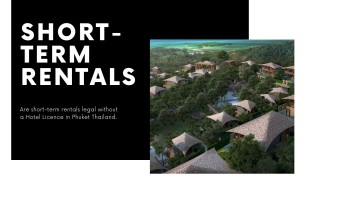
Yes, You Can Legally Rent Out Your Condo or Villa Short-Term in Thailand — Here's How to Do It Right
If you’ve recently purchased a villa or condo in Thailand —
or you’re seriously considering it — chances are you’ve heard a lot of
conflicting opinions about short-term rentals.
“Minimum 30-day stays only.”
“Airbnb is illegal here.”
“Police are raiding condos in Bangkok.”
Let’s clear the air:
Short-term rentals in Thailand are legal — when done properly, within
the law, and with the right support team.
What the Scare Tactics Don’t Tell You
You’ve probably seen headlines about Airbnb crackdowns or
building raids. But here’s the truth:
- These
actions typically target large-scale, commercial operations with
dozens of units and zero oversight — not individual property owners.
- In
many cases, authorities acted in response to guest behavior, criminal
activity, or local complaints — not because the owner listed their place
on Airbnb.
- If
you’re a private owner renting out one or two units responsibly, you’re not
the target of enforcement.
No one is being hauled away in cuffs for renting out their own home to respectful guests. That’s fear-mongering — not fact.

What the Law Actually Says
Thailand’s rental rules are governed primarily by two legal
frameworks:
The Hotel Act (No. 2)
B.E. 2551 (2008)
This act sets out licensing requirements for businesses that
rent rooms for less than 30 days. But — and this is key — it includes clear
exemptions:
You do not need a hotel license if:
- Your
property has fewer than 8 rooms,
- You
host fewer than 30 guests at a time, and
- You
run the rental as supplementary income, not as a hotel business.
So if you own 1 or 2 properties and rent it out occasionally
or even regularly — you are exempt from needing a hotel license under
this law.
Thailand’s Civil and
Commercial Code
- Article
1336 grants you the right to benefit from your property.
- Article
1360 allows you to use your property however you like, provided it
doesn’t interfere with others.
That means unless your guests are causing trouble, you
are well within your legal rights to rent your condo or villa short-term.
What About the “30-Day Minimum Stay” Rules in Some Condos?
Some condominiums claim to ban rentals under 30 days. But
here’s what’s important:
- These
rules only have legal weight if they were passed by a two-thirds
vote of all co-owners and properly recorded.
- Many
such rules are vague, unsupported by law, or based on outdated
interpretations of the Hotel Act.
- Thousands
of condos in Thailand either allow short-term rentals or quietly
permit them as long as they’re well-managed.
Still unsure? This is where working with a professional
management company becomes critical.

Why Professional Management Matters (and How It Can Protect You)
There are professional rental management companies in Phuket with years of experience helping owners rent out their condos and villas, legally
and safely. Professional property management makes all
the difference:
✅ Only renting out exempt,
private units
✅
Handling all TM30 immigration reporting
✅
Paying VAT and income tax properly
✅
Providing full insurance coverage, including short-term rental activity
✅
Screening guests, handling deposits, and managing disputes
✅
Communicating with building juristic offices to prevent conflict
Many of these rental management companies run a polished, lawful,
revenue-generating system. And it works.
Real Owner Story: How It Pays to Be Prepared
In March 2025, a condo owner in Phuket was blindsided when
new building rules suddenly banned rentals under 30 days. Threats followed —
including cutting off utilities and denying guest access.
Fortunately, this owner was working with a respected rental management company. Their legal partner stepped in, issued a formal objection based on the Hotel Act exemption, and attended a building meeting on the owner’s behalf.
The
result?
The building backed off.
Short-term rentals continued legally.
Today, that condominium continues to earn consistent income — and the “no
short-term rental” signs still posted in the building are just that: "signs".
Legal Precedent: Phuket Court Backs Condo Owner
In Phuket Provincial Court – Black Case No. 1196/2555,
a condo juristic person attempted to ban short-term rentals.
The court ruled:
- The
internal ban was not legally valid because it was not passed by a
proper two-thirds vote.
- The
owner had the right to rent under the Hotel Act exemption.
- The
building had no authority to stop them.
This case confirms that condominium rules cannot override
national law.

So Why Are Airbnb, Booking.com, and Agoda Still Operating in Thailand?
The reality:
- Thai
authorities recognize the economic value of short-term rentals.
- TM30
reporting is widely accepted, even for short stays.
- Problems usually arise only when owners ignore the law or disturb the peace — not when they manage responsibly.
Final Word: Don’t Be Afraid. Be Informed.
With the right team behind you, renting your property
short-term in Thailand is:
✔ 100% legal
✔ A solid source of passive income
✔ A great way to enjoy your property when you're in
town
✔ Much easier when handled by professionals
Want to Purchase a Phuket Condominium or Villa for Short-Term rentals? Let’s Talk.
At Phuket Realtor, we can help you:
- Choose
properties that are rental-friendly
- Understand
the legal process and avoid common mistakes
- Connect
with trusted property managers and legal advisors
- Earn
income from your condo with peace of mind
Get in touch today
and let’s secure a Phuket property that works for you — legally, professionally, and
profitably.

Greg Carlson is known for his honesty, reliability and hard work which goes into every detail of your real estate transaction at Phuket Realtor. Greg was born on the west coast, raised in Texas and practiced accounting in the United States, With over 8 years of experience in Thailand real estate, he is now a partner at one of the best independent real estate agencies in Thailand, Phuket Realtor.
